
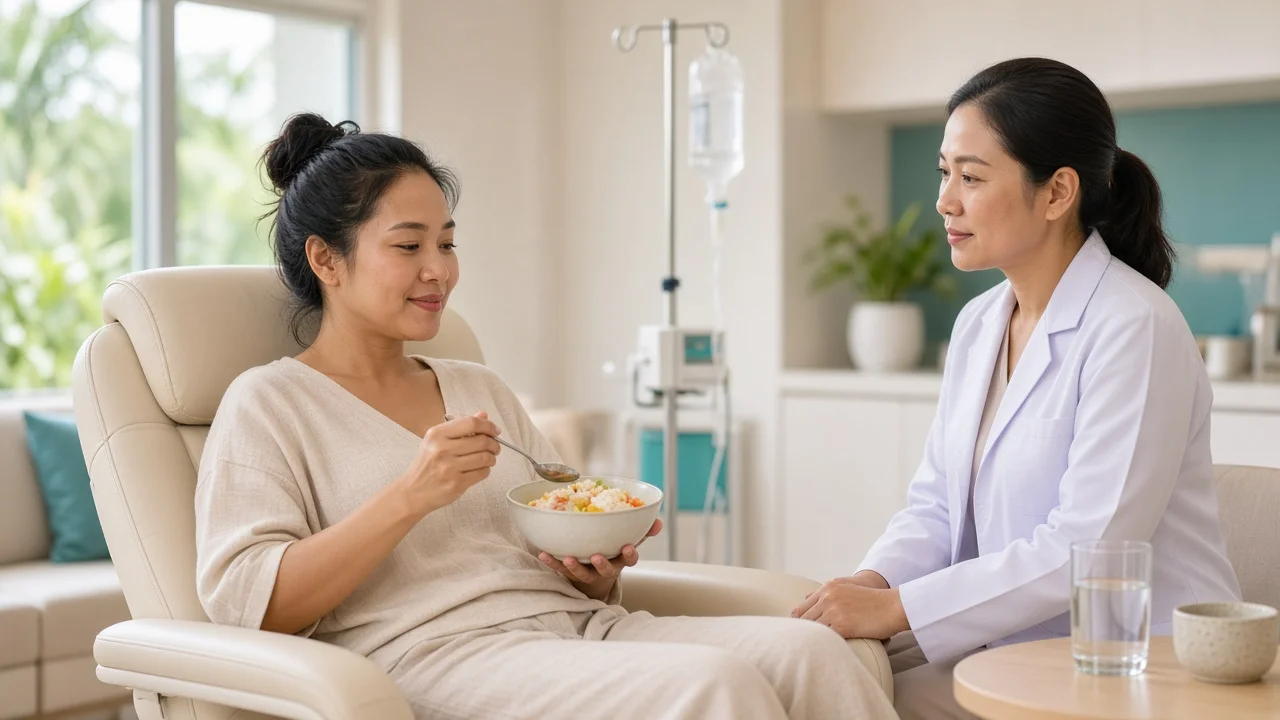
Most people who feel faint during a drip have not reacted to the drip at all — they arrived hungry, dehydrated and hot.
Should you eat before an IV drip? Yes, for most people a light meal one to two hours beforehand is sensible. An empty stomach, dehydration and heat all make light-headedness and fainting around needles more likely, and some vitamin infusions can feel unsettling on an empty stomach. Unless your doctor has asked you to fast for a blood test, eat something simple and drink water before you come.
Why eating first makes a difference
Needles, heat and an empty stomach
The Cleveland Clinic lists needles, dehydration, fatigue and being in a warm place among the common triggers of vasovagal fainting — a sudden drop in heart rate and blood pressure. On a tropical island in the middle of the day, a visitor who skipped breakfast after a late night ticks most of those boxes at once.
What blood services recommend
For a similar needle-in-the-arm procedure, the American Red Cross advises donors to eat a healthy meal, avoid fatty foods, and drink an extra 16 oz (about 500 ml) of water before the appointment. The same common-sense preparation suits an IV drip.
What to eat and drink beforehand
Simple, familiar food works best. Good options before a morning or afternoon drip:
- Rice, noodles or toast with eggs, chicken or tofu
- Fruit with yoghurt, or a smoothie with some protein
- A bowl of soup with bread
- Plenty of water, or an electrolyte drink if you have been sweating heavily
- Your usual coffee or tea in moderation — not several strong cups on an empty stomach
Avoid a very heavy or greasy meal right before, and avoid alcohol — it dehydrates you and can mask how you actually feel.
When you should not eat first
If a blood test is planned
Some screening blood tests — for example fasting glucose or a lipid profile — need you to fast. If the clinic has asked for one, follow that instruction and bring a snack for afterwards.
If you have a medical reason
People with diabetes, a stomach condition or on certain medicines may need specific timing. Tell the doctor at screening rather than guessing.
Light meal, empty stomach or heavy meal: how they compare
| Before your drip | Likely experience | Our view |
|---|---|---|
| Light meal 1–2 hours before, plus water | Usually comfortable; lower chance of light-headedness | Recommended for most people |
| Nothing since the night before | More likely to feel faint, shaky or queasy | Avoid unless a fasting blood test is needed |
| Large, greasy meal just before | Can feel sluggish or nauseous lying back | Better to eat lighter |
| Alcohol the night before, no water | Dehydrated; veins harder to find | Rehydrate first and tell the doctor |
| Fasting blood test planned | Brief fast is required | Follow the clinic’s instructions; eat afterwards |
General guidance only; your doctor may advise differently based on your health and the drip chosen.
Other ways to prepare
Bring your medical information
A list of medicines, supplements and allergies makes the screening faster and safer. The Cleveland Clinic notes that IV vitamin therapy is best avoided by people being treated for heart disease, high blood pressure or kidney disease, or who are pregnant, and that interactions with medicines are possible — so honesty at screening matters.
Dress for easy access
A short-sleeved or loose top makes the cannula easier to place and more comfortable to sit with for 30 to 60 minutes.
Step-by-step: preparing for your IV drip
A simple routine for the day of your appointment:
- Drink a glass or two of water when you wake up.
- Eat a light, non-greasy meal one to two hours before your appointment.
- Skip alcohol the night before if you can, and avoid it on the day.
- Bring a list of your medicines, supplements and allergies.
- Wear a short-sleeved or loose top.
- Tell the nurse or doctor at once if you feel dizzy, hot or sick during the drip.
- Sit for a few minutes afterwards before standing up, and drink more water.
What if you feel faint during the drip?
Speak up early
Warning signs such as yawning, sudden warmth, sweating, nausea or tunnel vision often come 30 to 60 seconds before fainting. Saying something immediately lets staff pause the drip, recline the chair and raise your legs.
Simple counter-measures
Tensing the leg and buttock muscles, or squeezing a ball, can help keep blood pressure up. Most people feel better within minutes once lying flat with a drink.
IV drips at LIV Clinic
Screening comes first
At LIV Clinic on Koh Samui and Koh Phangan, every drip starts with a short medical screening by Dr. Narathai‘s team, including blood pressure and your history, before anything is prescribed.
Read next
See our IV drip service, read how often you can have an IV drip, or book a consultation.
Frequently asked questions
Should you eat before an IV drip?
For most people, yes. A light meal one to two hours beforehand and some water make light-headedness and fainting less likely. Only fast if a blood test requires it.
Can I have an IV drip on an empty stomach?
It is possible, but many people feel shakier or queasier that way, and fainting around needles is more likely when you are hungry and dehydrated. A small meal is usually the better choice.
Is it okay to drink coffee before a drip?
A normal cup is fine for most people. Several strong coffees on an empty stomach can leave you jittery and dehydrated, so pair it with water and food.
Can I drink alcohol before an IV drip?
It is best not to. Alcohol dehydrates you, can mask how you feel and may interact with some medicines. Tell the doctor if you drank heavily the night before.
How much water should I drink beforehand?
A couple of glasses in the hours before is a sensible target for most adults. Blood services suggest an extra 500 ml or so before a needle procedure. People with heart or kidney conditions should follow their doctor’s advice.
What should I eat after an IV drip?
A normal light meal and more water. Sit for a few minutes before standing, and if you feel unwell after leaving, contact the clinic.
Safety and consultation
An IV drip is a medical procedure and carries some risk — common effects include bruising or discomfort at the cannula site, and less common reactions are possible, which is why a medical screening comes first. Results vary from person to person, and no specific outcome can be promised. This article is general information, not medical advice.
At LIV Clinic, every treatment begins with an in-person assessment by Dr. Narathai Vichienkalayarut, M.D., who reviews your skin, medical history and goals before recommending a personalized plan. Book a consultation to find out whether this treatment suits you.
LIV Clinic — “Live Your Life Young”
Doctor-led aesthetic and wellness clinic on Koh Samui and Koh Phangan, serving both international visitors and local residents.
Koh Samui (Bophut): 1/63 Thaweeratpakdee Rd, Bo Put, Koh Samui, Surat Thani 84320 · Tel 065-996-4242
Koh Phangan: 116/16 Moo 1, Koh Phangan, Surat Thani 84280 · Tel 093-254-5259
LINE: @Livclinic · Book a consultation
Explore our IV drip and skin treatment services.
ฆสพ.สฎ. 78/2567